Convenient USB Powered Bedside Reading Light
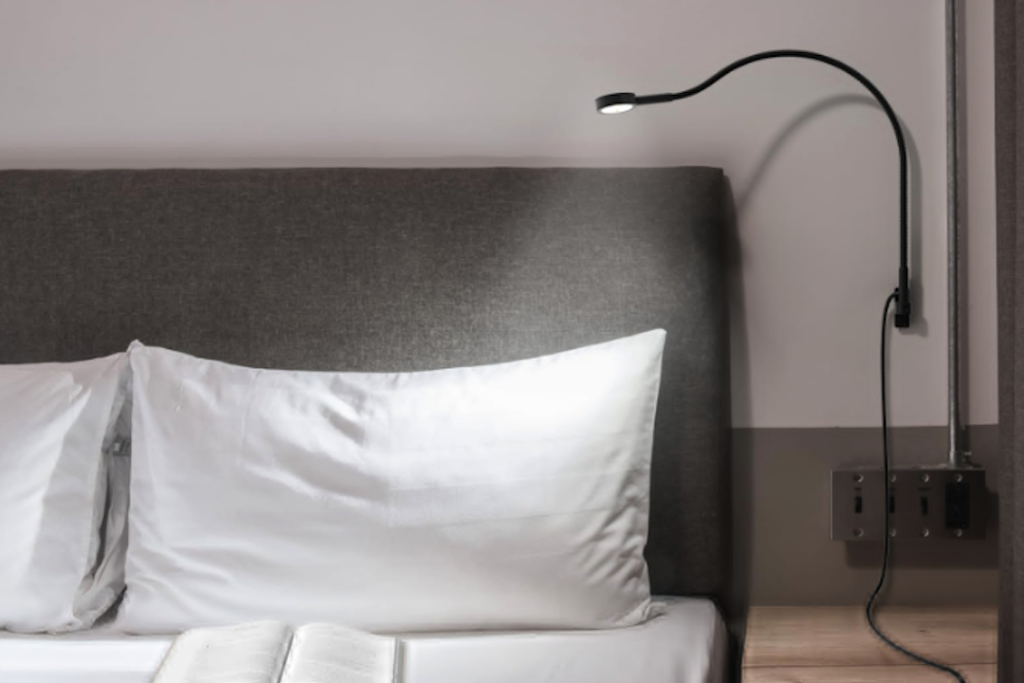
Here is an article formatted for Wikipedia, focusing on the “Convenient USB Powered Bedside Reading Light” with a factual tone and avoiding excessive rhetoric.
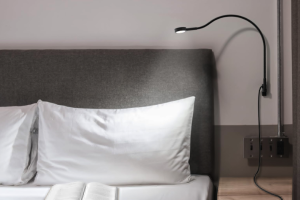
A bedside reading light Aluredesign serves a practical purpose, offering illumination for activities performed in low-light environments, often in close proximity to a bed. The advent of USB power integration has introduced a specific iteration of this device, characterized by its reliance on a USB port for its electrical supply. This method of power delivery offers certain advantages in terms of accessibility and portability, aligning with the evolving landscape of personal electronics.
The physical manifestation of a USB powered bedside reading light is typically straightforward, prioritizing functionality and ease of use. The core components consist of a light source, a power input mechanism, and a supporting structure.
Light Source Technologies
The illumination itself is commonly provided by Light Emitting Diodes (LEDs). These solid-state devices are favored for their energy efficiency, long operational lifespan, and their ability to be miniaturized, allowing for compact fixture designs.
LED Characteristics
LEDs offer a directed light output, which can be beneficial for task lighting as it minimizes unwanted diffusion and glare. The color temperature of the emitted light is a quantifiable metric, often expressed in Kelvin (K). Values ranging from warm white (around 2700-3000K) to cool white (5000K and above) are available, each influencing the perceived ambiance and suitability for different reading preferences. Some models may offer adjustable color temperatures, allowing users to switch between warmer and cooler tones.
Incandescent and Halogen Alternatives (Historical Context)
While LEDs dominate the current market, older or less sophisticated designs might have utilized incandescent or halogen bulbs. These technologies, though less energy-efficient and generating more heat, were prevalent in early portable lighting solutions. Their inclusion is primarily for historical context and to contrast with modern advancements.
Power Input and Connectivity
The defining characteristic of this category of reading light is its USB power input. This standard interface has become ubiquitous in modern technology, facilitating a broad range of connectivity options.
USB Type-A and Type-C Ports
Historically, USB Type-A ports have been the primary interface. These are the rectangular connectors familiar to users of most computers and power adapters. More recent designs may incorporate USB Type-C ports, which offer reversible plug orientation and potentially higher power delivery capabilities, though for a simple reading light, the power requirements are generally modest.
Power Delivery Requirements
The power consumption of a USB powered bedside reading light is typically low, often ranging from 1 to 5 watts. This allows them to be powered by a variety of USB sources, including wall adapters, power banks, computer USB ports, and even some smart television USB outputs. Understanding the amperage and voltage specifications of the power source is generally less critical for these low-power devices, as they are designed to operate within common USB standards.
Structural Elements
The physical form factor of these lights can vary, but generally includes a base or mounting mechanism, an arm or gooseneck, and the light head.
Flexible Goosenecks
A common feature is the flexible gooseneck, which is a conduit or series of interconnected segments that allows the light head to be positioned accurately over a book or reading material. This articulation is crucial for directing light precisely where it is needed, reducing eye strain. The materials used in goosenecks vary, impacting their durability and flexibility.
Clamp Mechanisms
Some designs employ a clamp to attach the light to a headboard, a shelf, or a desk. This offers a stable mounting solution and can be particularly useful in smaller spaces where a freestanding lamp might be impractical. The clamping force and the material of the clamp are important considerations for stability.
Swivel and Articulation Points
Beyond the gooseneck, other articulation points may be present in the arm or the head of the light. These allow for a wider range of adjustability, enabling users to fine-tune the light’s position to suit their specific needs and the geometry of their sleeping or reading area.
Functionality and Application
The primary function of a USB powered bedside reading light is to provide localized illumination for reading. However, its design lends itself to a spectrum of uses beyond this primary objective.
Task Lighting in Various Settings
While designed for bedside reading, the portability and directable light of these fixtures make them suitable for other task-oriented activities.
Hobby and Craft Illumination
For individuals engaged in hobbies that require detailed work, such as model building, sewing, or intricate drawing, a small, adjustable light can be invaluable. The USB power source also means it can be used in locations where traditional outlets might not be readily available.
Workspace Enhancement
In home offices or shared living spaces, a USB reading light can supplement overhead lighting for focused work on a desk without disturbing others. Its compact size makes it an unobtrusive addition to a work area.
Portable and Travel Use
The reliance on USB power makes these lights particularly advantageous for travelers. Power banks and portable charging solutions are common, allowing users to create a reading environment in hotel rooms, on trains, or during camping.
Dimming and Brightness Control
Many USB powered bedside reading lights offer adjustable brightness levels. This feature allows users to tailor the light intensity to their preference and the ambient light conditions.
Stepped vs. Continuous Dimming
Dimming can be implemented in discrete steps (e.g., low, medium, high) or through a more continuous, gradient adjustment. Stepped dimming is often controlled by physical buttons or touch sensors, while continuous dimming might involve a rotary dial or a touch-sensitive slider. The user experience of dimming can significantly impact the perceived convenience of the light.
Memory Functionality
Some advanced models incorporate a memory function, allowing the light to recall the last used brightness setting upon reactivation. This eliminates the need to re-adjust the light each time it is turned on, contributing to a more seamless user experience.
Color Temperature Adjustment (Where Applicable)
As mentioned previously, some lights offer adjustable color temperatures. This can be a significant advantage for users who experience eye strain with certain light hues or who prefer different color temperatures for different times of day or types of reading.
Circadian Rhythm Considerations
The ability to select warmer color temperatures in the evening can align with natural circadian rhythms, potentially promoting relaxation and facilitating sleep. Conversely, cooler tones might be preferred for tasks requiring heightened alertness.
Power Supply and Energy Efficiency
The integration of USB power is a significant aspect of these reading lights, influencing their power consumption and overall energy efficiency.
USB as a Universal Power Standard
The widespread adoption of USB as a power delivery standard has been a catalyst for the development of many low-power electronic devices, including these reading lights. It simplifies power sourcing and reduces the need for proprietary chargers.
Power Source Versatility
The ability to draw power from a diverse range of USB sources means users are rarely without a means to operate the light. This versatility is a key component of its convenience.
Energy Consumption Metrics
Understanding the energy consumption of these lights is important for assessing their environmental impact and their longevity when powered by batteries.
Wattage and Amperage
The wattage rating of a LED reading light is typically low, often between 1 and 5 watts. This translates to minimal power draw from the source. Correspondingly, the amperage drawn is also low, usually within the standard USB 2.0 (0.5A) or USB 3.0 (0.9A) ranges, or slightly higher for models with enhanced charging capabilities.
LED Efficiency
LEDs are inherently more energy-efficient than older lighting technologies. This means that for a given amount of light output (lumens), LEDs consume less power. This efficiency contributes to longer run times when powered by battery packs.
Battery Pack Integration and Usage
When used with portable power banks, the energy efficiency of the light directly impacts how long the power bank can sustain its operation.
Power Bank Capacity (mAh)
The capacity of a power bank, measured in milliampere-hours (mAh), dictates how many times it can recharge or power a device. A lower wattage reading light will deplete a power bank more slowly, extending its usability.
Charge Cycles and Battery Degradation
The act of charging and discharging power banks, and by extension, powering the reading light, contributes to the overall wear on the power bank’s battery. Understanding battery chemistry and charge cycles can inform users about the expected lifespan of their power sources.
User Interface and Control
The methods by which a user interacts with and controls a USB powered bedside reading light are integral to its usability and convenience.
Button and Touch Controls
The most common control mechanisms involve physical buttons or integrated touch-sensitive surfaces.
Simple On/Off Switches
Basic models may feature a straightforward on/off switch, providing immediate access to illumination.
Multi-Function Buttons
More sophisticated designs may use a single button for multiple functions, such as pressing once for on/off, holding to dim, or pressing multiple times to cycle through brightness levels or color temperatures.
Touch-Sensitive Panels
Touch interfaces offer a sleek aesthetic and can facilitate a more fluid control experience. These can range from simple tap zones to sliders for brightness adjustment.
Integrated Features and Settings
Beyond basic illumination control, some lights offer additional features designed to enhance the user experience.
Timer Functions
Certain models may include a built-in timer, allowing the light to automatically switch off after a predetermined period. This is useful for users who may fall asleep while reading and wish to conserve power.
Inductive Charging Capabilities
While not a control function, some bedside lamps with USB ports may also incorporate wireless inductive charging pads for compatible smartphones. This consolidates functionality in a single bedside unit.
Advantages and Considerations
The widespread adoption of USB powered bedside reading lights stems from a set of distinct advantages, though certain considerations are also pertinent for potential users.
Portability and Mobility
The USB power requirement liberates these lights from the constraints of traditional wall outlets.
Freedom from Wall Sockets
This mobility is particularly valuable in dorm rooms, rented accommodations, or during travel, where outlet availability may be limited or inconveniently located. The light becomes an independent unit, capable of operating wherever a USB power source can be found.
Compact and Space-Saving Design
Many USB powered reading lights are designed with a minimalist footprint, making them unobtrusive in bedroom environments.
Minimalist Aesthetic
Their small size and integrated components allow them to occupy minimal surface area, a significant advantage in smaller bedrooms or areas with limited bedside table space.
Versatile Powering Options
The ability to connect to a wide array of USB-enabled devices provides a flexible power ecosystem.
Compatibility with Existing Devices
Users can leverage existing chargers, power banks, and computer ports as power sources, reducing the need for additional, specialized equipment. This can be akin to finding a universal key that unlocks many doors.
Cost-Effectiveness
Generally, USB powered reading lights represent an economical lighting solution.
Lower Initial Investment
Compared to more elaborate bedside lamps or task lighting systems, the initial purchase price for a basic USB reading light is often modest.
Reduced Energy Expenses
The energy efficiency of LED technology further contributes to lower operational costs over time, particularly when compared to older lighting technologies.
Potential Limitations and Drawbacks
While convenient, these lights are not without their potential drawbacks.
Light Intensity and Coverage Limitations
The directional nature and typically lower wattage of these lights may not provide sufficient illumination for very large reading areas or for individuals who require brighter light. Their coverage is often localized.
Durability of Gooseneck and Controls
The gooseneck, while flexible, can be susceptible to wear and tear with frequent adjustment. Similarly, the longevity of touch controls or button mechanisms can vary between manufacturers and models.
Cable Length and Placement
The length of the integrated USB cable, or the requirement for an external one, can dictate the placement of the light relative to its power source. An insufficient cable length can limit positioning options, creating a constraint like a short leash.
Potential for Glare and Eye Strain
While designed to reduce glare, improper positioning or excessive brightness can still lead to eye strain, especially during extended reading sessions. Users must be mindful of directing the light away from their direct line of sight.
In conclusion, the USB powered bedside reading light represents a practical evolution in personal illumination, offering a blend of portability, energy efficiency, and user-friendly design. Its reliance on the ubiquitous USB standard has cemented its place as a convenient and accessible tool for readers and individuals requiring localized light in various settings.